
Kurdish identity, or the lack thereof, in modern Turkey continues to be a main issue which many modern Turkish films wish to tackle. Many directors and actors, such as Yavuz Turgul and Yılmaz Erdoğan, portray Kurds and their struggles in Turkey. Many films focus on a specific time period, usually around the establishment of the Turkish Republic by Ataturk or very soon after. These films tend to tackle the issue of Kurdish poverty, education, the role of women, and modernization. Many filmmakers have felt that the Kurdish people and the entire Eastern part of Turkey has been forgotten in an attempt to become more western. Kurdish films focus on the ordinary life in Eastern Turkey and the immense struggles they face in light of military takeovers, political stresses, and industrialization. Ekşi Elmalar / Sour Apples (2016) directed by Yılmaz Erdoğan is one such film. Taking place in the farthest eastern province of Turkey, the film follows a Mayor and his three daughters as they face the everchanging future, while still trying to find love, loyalty, and family. Sour Apples (2016) identifies the struggles of Kurds in straddling the line between Turkish and Kurdish identities, through the themes of education, migration and the role of women, accentuated by the use of mise-en-scene in contrasting images.
Sour Apples (2016) takes place in the eastern part of Turkey in Anatolia durings the 1970s. Primarily the film is set in the town of Hakkari, the capital of Hakkari Province. The story follows Aziz (Yılmaz Erdoğan), the former mayor of Hakkari, and his family made up of his wife (Devrim Yakut) and three daughters (Farah Zeynep Abdullah, Şükran Ovalı, and Songül Öden). The three daughter live in a very traditional home, amidst a famous apple orchard, where they hardly leave from. The Mayor is a strict father, with views of regaining the mayorship and pulling his town out of poverty through tourism. With the introduction of Özgür, a man from Antalya, comes the the introduction of the west and a challenge to the status quo enforced by the Mayor. One of the daughters (Muazzez) falls in love with Özgür, while the other two find love outside their father knowledge. The Mayor finds out, separating them from their first loves and marrying them off to different men in the village who he finds acceptable. This leads to a separation of the daughters, who are each others only friends in the world, and the breakdown of the family.
In the meantime, the Mayor if campaigning to regain the mayorship, when a military coup abolishes all political parties, crushing any hope of victory. This leads the family (the Mayor, Ayda his wife, and Muazzez who has not been married off) to move to the home of their middle daughter in Antalya, a more modern city, leading to a shift in tradition and leadership in the family. The Mayor is losing his memory due to dementia, so Muazzez takes over the role of head of house. The daughters become more independent from their father as well as from their spouses, as one is separated from her husband due to his problem with drinking, and the other being the stronger personality of the two. The film ends in a climax of hope and simple joy as they live into the new reality of their world, while finding true love and family.
Sour Apples (2016) is one of the newer films to tackle the issue of Kurdish identity in Turkey; however, this is nothing new. Turkish Cinema has a long history of addressing this issue through movies. Unfortunately, “a serious study of the beginnings of Kurdish cinema within the borders of Turkey, Turkish films about Kurds and the presentation of Kurdish identity in Turkish cinema has not been made” ( Donmez-Colin. 91.)
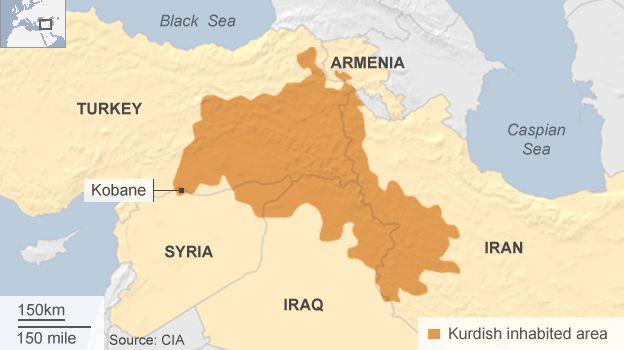
For the longest time in Turkish films, Kurds were not even recognized as a people group, “Turkish cinema, until the 1990s, showed Kurds as Turks.” (Colin 91). Even when Kurds were shown in film, they “were the poor illiterate easterners from the mountains.” ( Donmez-Colin. 91.) It wasn’t until the the introduction of the film Yol / The Way by Yılmaz Güney were the struggles of Kurdish people brought to a wide audience of both Turkish and international people ( Donmez-Colin. 92.). From there, showing Kurdish identity in film has become more of a common occurrence, even if not publicly stated. Even for Erdoğan, Sour Apples is not the first film to tackle this issue.
The first film Yılmaz Erdoğan ever directed and starred in is Vizontele (2001). It is the story of an eastern Kurdish village that get a new television in 1974. This was an extremely popular film, with a worldwide audience ( Donmez-Colin. 93.). The film looks at Kurdish identity in the face of modernization as Turkey moves forward to become a more Western nation. Erdoğan, though, says the film is not about a political agenda but takes a neutral approach to ask important questions about the community and their treatment. In a similar way, Sour Apples confronts the problem in a non-political way. Erdoğan represents Kurdish people in the family of the film, the Mayor representing the traditional path making its way to modernity ( Şen ). Along the way, his life is shaken causing change at an accelerated pace. In many ways, this film looks at the problem in very normal ways, through the lenses of education, migration and the role of women ( Özcan ). On the other hand, the way in which Erdoğan portrays these themes should be something to admire.
Education or the lack thereof is one of the biggest points shown in the film. In the movie, only the men are educated in the east. The Mayor is educated in that he knows how to graft apple trees and how to dry up swamps with poplar trees, he also knows how the political system should work and how he wants to bring his town into the modern age. On the other hand, only one of his daughters knows how to read or write, while his wife and other two can’t do either. But this is much more than a men versus women problem, it is really an east versus west problem. Özgür brings with him the education of the west and the ideals of educating women. In one scene he starts to teach Muazzez to read (46:31-47:55). She has always looked at the pictures in her photonovels but could never read. The book acts as a prop in which the transmission of the west to the east, and vice versa can happen.
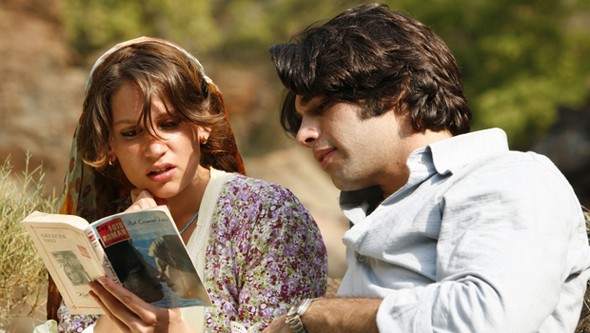
Muazzez adorns traditional attire. Özgür wears his modern clothes. They create a contrast on both the intellectual and aesthetic levels. But there is no clash between cultures in this scene as we might see in other scenes or other films. The scene makes it seem that the west is superior to the east; however, I believe that Erdoğan is using this interaction to show how the east has actually been left behind by the west and how the east will not move forward by force but with consent. It was Muazzez who asked to be taught, and she could only ask the person she knew would help. In this scene, the two characters represent a united turkey, east and west, working together for the education of the whole. Both women and men, equal is power and understanding.
Showing the clash between modernity and tradition in the east, Erdoğan creates a contrast from the beginning of the film to the end concerning the role of women in society. The film takes place over a series of years starting in 1977, giving the film a chance to build its message and show the shift in culture. Two contrasting scenes exemplify this. First, in the beginning of the film, Özgür gives Muazzez a gift of shampoo. They Mayor is not happy about this, thinking that his daughters are accepting gifts from strange men, and goes to punish them (12:50-15:45).
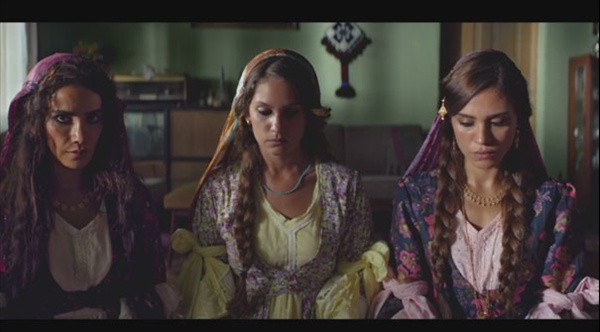
In this scene, the Mayor sits above the three daughters, questioning them on their motives. They are wearing traditional women’s clothes, while he is wearing a suit. The lighting is dark, showing the emotion of the scene: foreboding and oppressive. Once Muazzez confesses, they Mayor takes off his belt to then whip her hands. This shows that women were seen to be subservient and needed to do what they were told. A very traditional view of women.
This is contrasted with the scene where Muazzez is taking care of her father in Antalya, when they are much older (1:41:30-1:42:00). In this scene, the Mayor is sitting below Muazzez while she baths and clothes him. At this point in the film, the Mayor has succumb to Alzheimer’s and have very little memory left. The lighting is brighter yet melancholy, representing the loss in the Mayor. They both are in modern clothes, Muazzez representing the most change with her hair cut and loss of traditional clothes. They have now come into the modern age. The women are not subservient but in charge. Unfortunately, with this quick modernization, comes the loss of identity, represented in the Mayor. Are they still Kurdish or now Turks? Even though women’s rights are a positive, did the swiftness of change damage the Kurdish culture?
At this point in the film, the Mayor has succumb to Alzheimer’s and have very little memory left. The lighting is brighter yet melancholy, representing the loss in the Mayor. They both are in modern clothes, Muazzez representing the most change with her hair cut and loss of traditional clothes. They have now come into the modern age. The women are not subservient but in charge. Unfortunately, with this quick modernization, comes the loss of identity, represented in the Mayor. Are they still Kurdish or now Turks? Even though women’s rights are a positive, did the swiftness of change damage the Kurdish culture?
Sour Apples (2016) asks some very important questions about the loss of identity and culture in the Kurdish people. Using skillful cinematography, scriptwriting, and acting, Erdoğan weaves this societal issue into a story about family, romance, and change. This is a highly political film, though it isn’t overwhelming. This is a fantastic film simply for its aesthetic features; however, the story is engaging and beautifully told. I recommend this film to anyone, whether you have an understanding of Kurdish socio-politics or not. The Kurdish people are an important part of the rich fabric that makes up the Middle East and especially Turkey. As the future rolls forward at full speed, will they be left behind? There fight for identity continues and can only succeed through the efforts of artists, politicians, and average people bringing the issue to light. This film is a great place to start.
Works Cited
Donmez-Colin, Gonul. “Denied Identities.” Turkish Cinema, Reaktion Books, 2008, pp. 89–115.
Özcan, Rabia Elif. “Bir Hatıra Bahçesi: Ekşi Elmalar (2016).” Fil’m Hafızası, 10 Apr. 2019,
filmhafizasi.com/bir-hatira-bahcesi-eksi-elmalar-2016/.
Şen, Nusret. “Ekşi Elmalar Film Eleştirisi.” OrtaKoltuk, 2 Dec. 2016,
ortakoltuk.com/film-elestirileri/eksi-elmalar.
 Günaydın Ashland